Physical Address
304 North Cardinal St.
Dorchester Center, MA 02124
Physical Address
304 North Cardinal St.
Dorchester Center, MA 02124

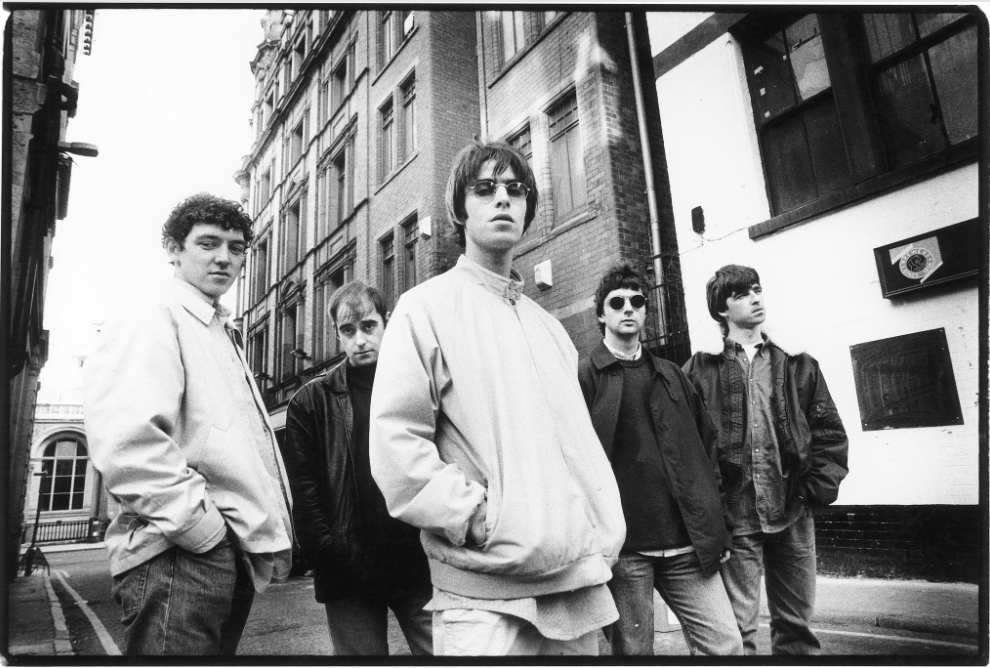
You’ll hear from some people that Oasis only released two good albums. That has always been nonsense as the quality didn’t just stop with (What’s the Story) Morning Glory?. For many fans, that quality continued with Be Here Now and beyond.
Be Here Now is certainly different from the first two records. Self-indulgent and excessive are two criticisms I often here, but these are two of the reasons I love it.
The criticism surrounding Be Here Now has often become exaggerated to the point where many music fans talk about it as though it is an outright disaster. In reality, the record contains some of Oasis’s strongest songs and will forever remain an enjoyable listen.
All albums deserve to be judged in isolation but for Be Here Now, that was next to impossible. By 1997, expectations had reached absurd levels. Fans, journalists, and record executives expected another era-defining masterpiece.
Almost any album would have struggled under that pressure. The reality is that Be Here Now was judged not on its own merits but against two modern classics. An album that might have been considered an epic from most bands was instead viewed as a disappointment because it wasn’t quite as revolutionary as what came before.
One of the strangest aspects of the album’s reputation is how often people forget just how many strong tracks it contains.
“D’You Know What I Mean?” remains one of Oasis’s most swaggering singles, combining huge guitar riffs with a sense of scale rarely heard in Britpop.
“Stand by Me” is a powerful anthem that would have been a career highlight for countless bands. “My Big Mouth” and “Be Here Now” are foot stompers that would sound incredible if they ever played it live.
“Don’t Go Away” is one of their best and showcases a more emotional side of Noel Gallagher’s songwriting, while “I Hope, I Think, I Know” delivers the kind of melodic hook that Oasis built their reputation on.
Even deeper cuts such as “The Girl in the Dirty Shirt” and “Fade In-Out” have gained appreciation among fans over time.
“All Around The World” is as self-indulgent as it gets, but it’s still a joyous crescendo of Britpop excess.
The idea that Be Here Now contains weak songs is often overstated. The bigger issue is that many of those songs are longer than they need to be.
The most common criticism of Be Here Now is that it is bloated. That criticism is fair, to a point
Several tracks stretch well beyond the point where their ideas have been fully explored. Guitar overdubs pile on top of one another, outros continue for too long, and nearly every song feels supersized. Aside from the reprise, “I Hope, I Think, I Know” is the shortest track at 4:22.
However, there is an important distinction between songs being too long and songs being bad.
Many critics discuss the album as though the songwriting itself collapsed, when in reality, much of the material is strong. If tracks such as “Magic Pie” or “My Big Mouth” had been produced more aggressively, they might be viewed very differently today.
A leaner version of Be Here Now would probably be remembered differently, more flavorably looked upon by critics. Yet, I’ve come to see its bloated nature as part of its charm. You were happy for songs that seemingly went on forever because you never wanted the party to end.
One reason many fans continue to love the album is that it perfectly captures a unique moment in Oasis’s history.
This was a band operating with complete confidence. They weren’t trying to be fashionable, experimental, or restrained. They wanted every chorus to be enormous, every guitar to sound massive, and every song to feel like an event.
That approach occasionally tipped into excess, but it also created a record with a larger-than-life personality.
Unlike many albums that play things safe, Be Here Now never feels timid. It reflects a band that genuinely believed they could do anything, and there is something compelling about hearing that level of ambition, even when it doesn’t always lead to perfection.
The album’s reputation has also been shaped by the narrative surrounding it.
Many of the same publications that initially praised the record later reversed course and criticized it. Noel Gallagher has become famously critical of the album in recent years, helping cement the idea that it was a failure.
As a result, discussions about Be Here Now often focus more on the backlash than on the music itself.
For younger listeners approaching the album without the weight of 1997 expectations, the experience can be surprisingly positive. Instead of hearing a catastrophic collapse, they hear a collection of big, catchy rock songs performed by a band still operating near its commercial peak.
Describing it as one of rock music’s great failures misses the mark entirely.
What remains is an album packed with memorable melodies, huge choruses, and several genuinely excellent songs. It may not reach the heights of the first two albums, but which albums in the genre have?Nearly three decades after its release, Be Here Now deserves to split opinion. It was entertaining, ambitious, and yeah, a little bit off its head. It may not be Oasis’s best album, but it’s still a great one.